
Anti-graffiti film for the whole vehicle
Full-body wrap in horizontal printed strips, applied bottom edge upward with minimal seams. Around 100 m² per vehicle, under an eight-year warranty.

A full repaint takes 300 hours per railcar and starts fading by year five. Film goes on in two days, shrugs off spray paint, and still looks new at year seven.
Anti-graffiti film for rolling stock — applied in your depot, or specified straight from the factory on new builds.
Measured across blasting, grinding, filling and the related surface work.
Three hundred hours of repainting against two days of prep and film.
Labour alone — before the days that car is back in service.
Against three years for paint — and it outlives the warranty comfortably.
Film gives spray paint nothing to sink into. It lifts off with standard cleaning products, and the livery underneath is never touched.
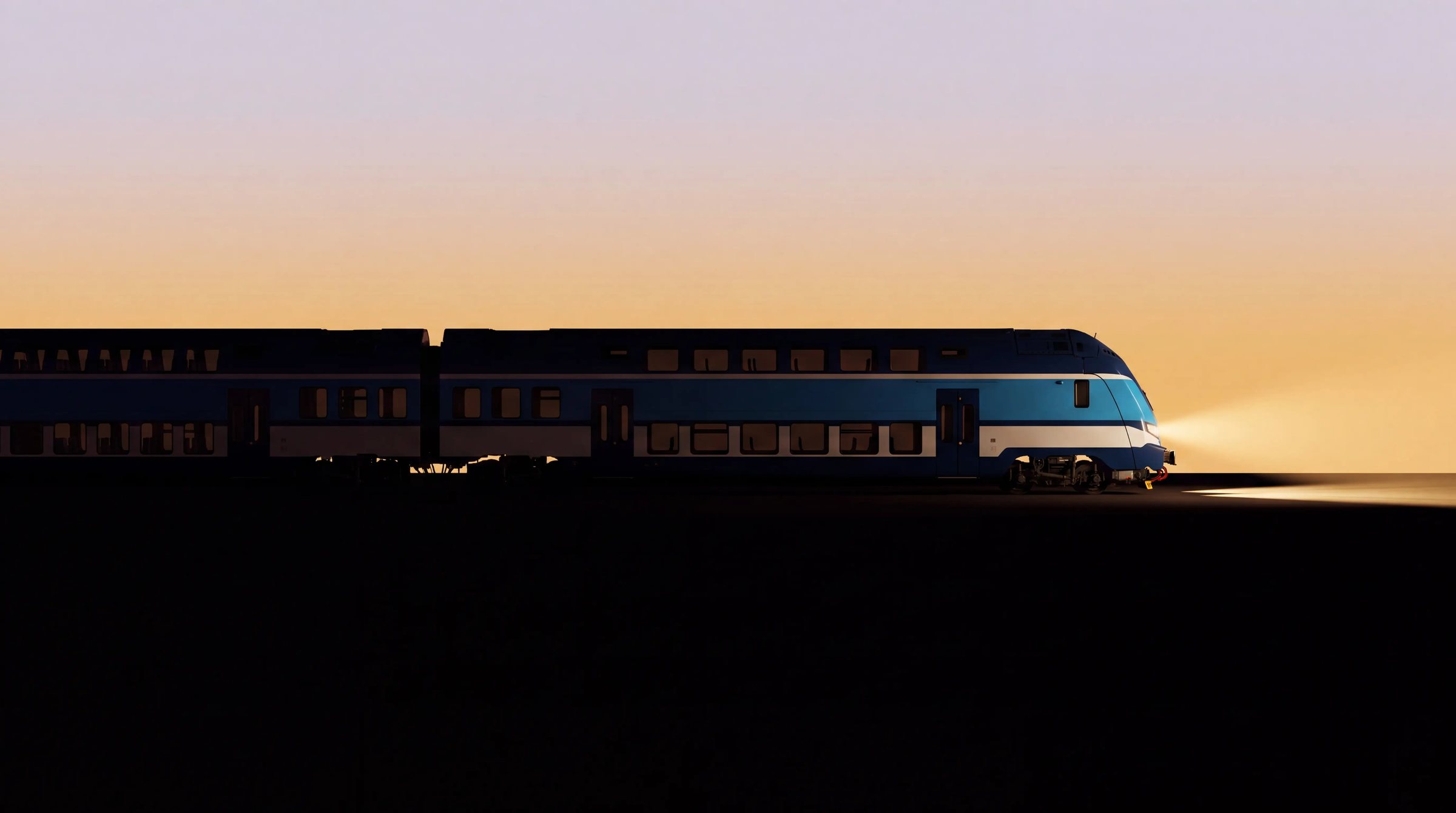
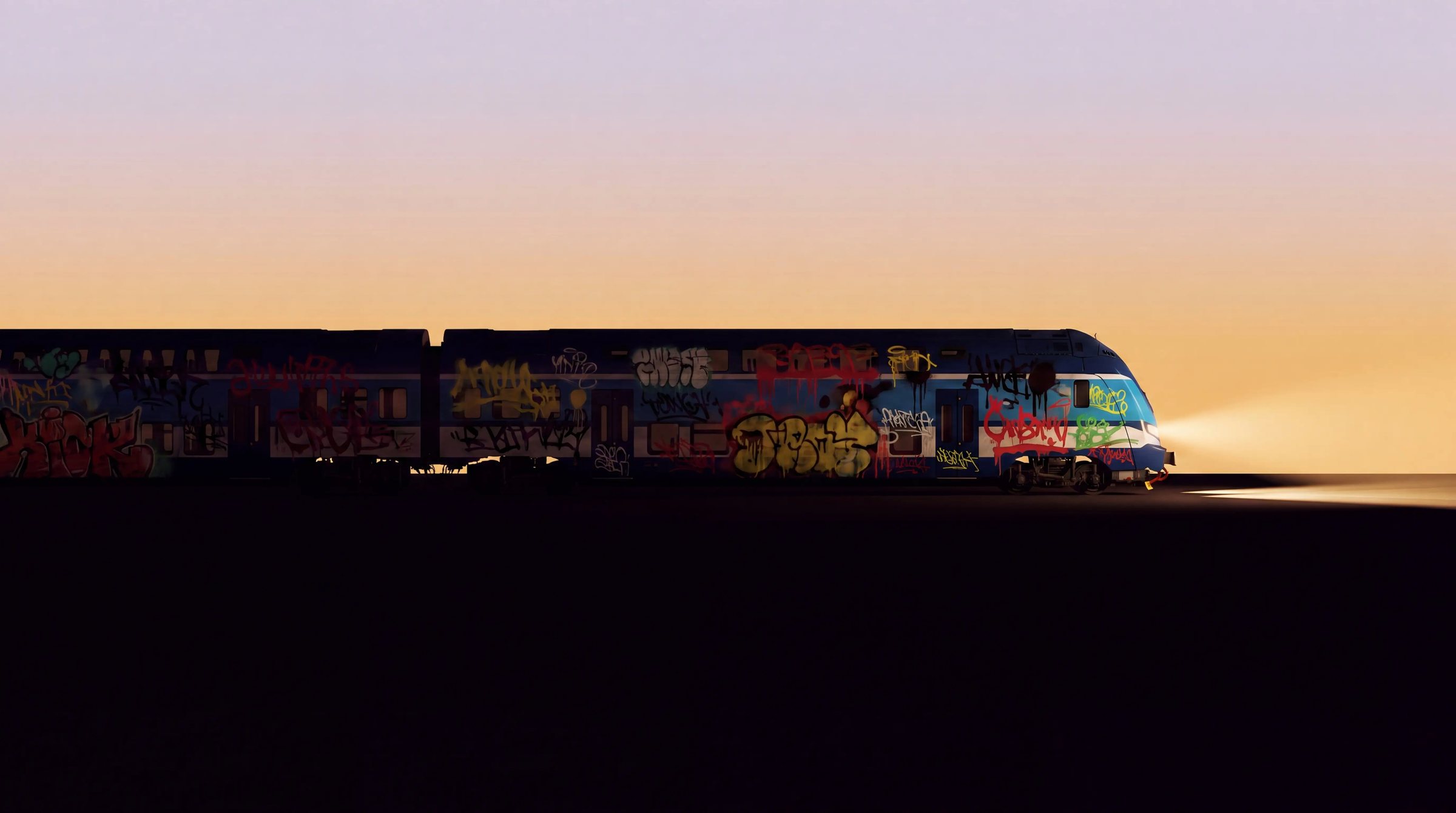
One hour on film clears 20 m²; the same hour on paint only manages 4 m², with the same crew and products.
Film washes up to twice as fast, with no risk of damaging the surface underneath during cleaning.
15,100 m² removed in 2023, down to 8,100 m² in 2024, and under 3,000 m² by mid-2025 as coverage grew.
Beyond protective film
Everything the vehicle needs
Film is where most projects start, and rarely where they end. We take on everything that touches the outside of a vehicle.
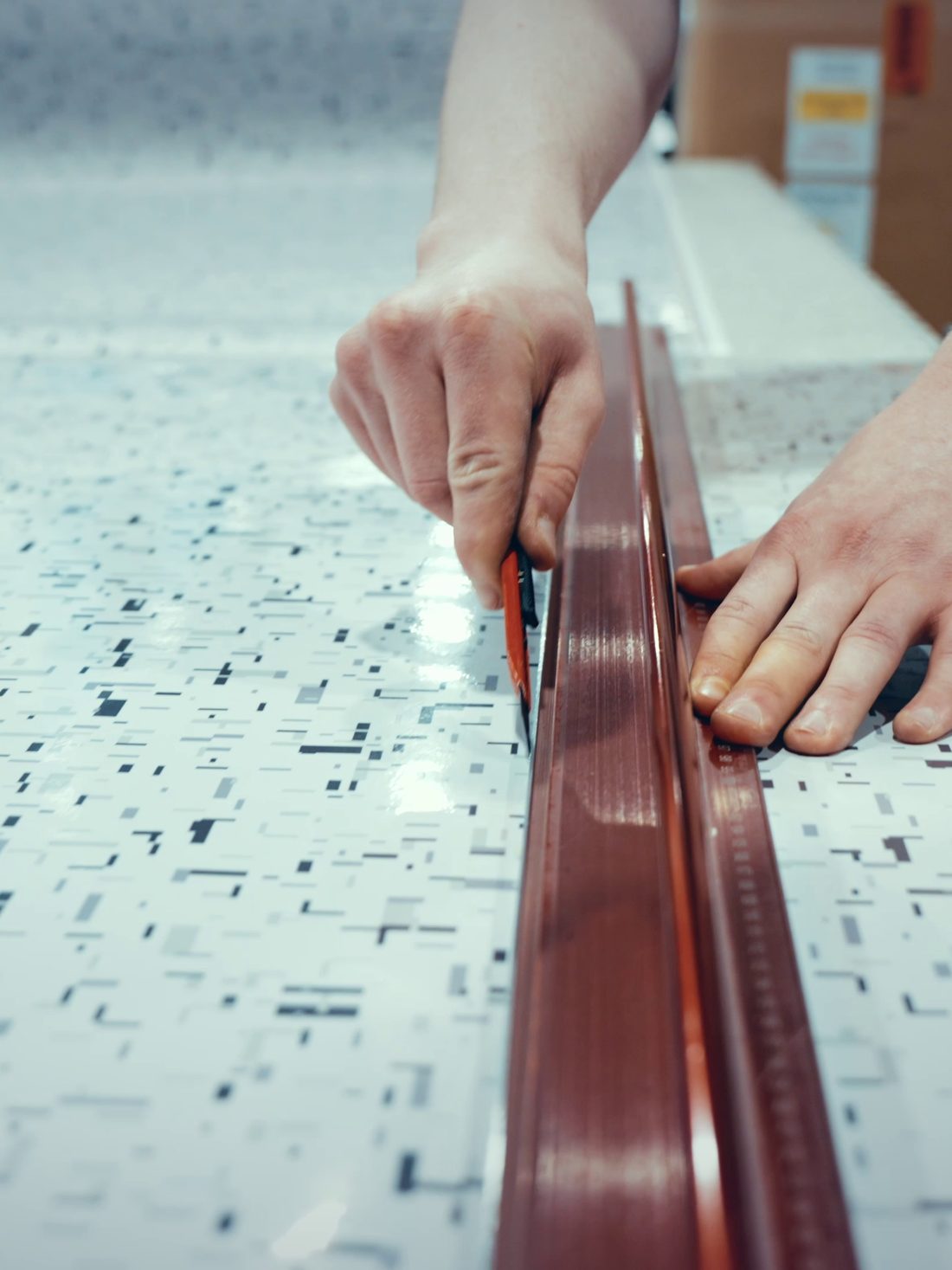
Full-body wrap in horizontal printed strips, applied bottom edge upward with minimal seams. Around 100 m² per vehicle, under an eight-year warranty.
Handrails and fittings come off. Uneven areas are sanded and filled, surfaces degreased and cleaned, then everything is refitted.
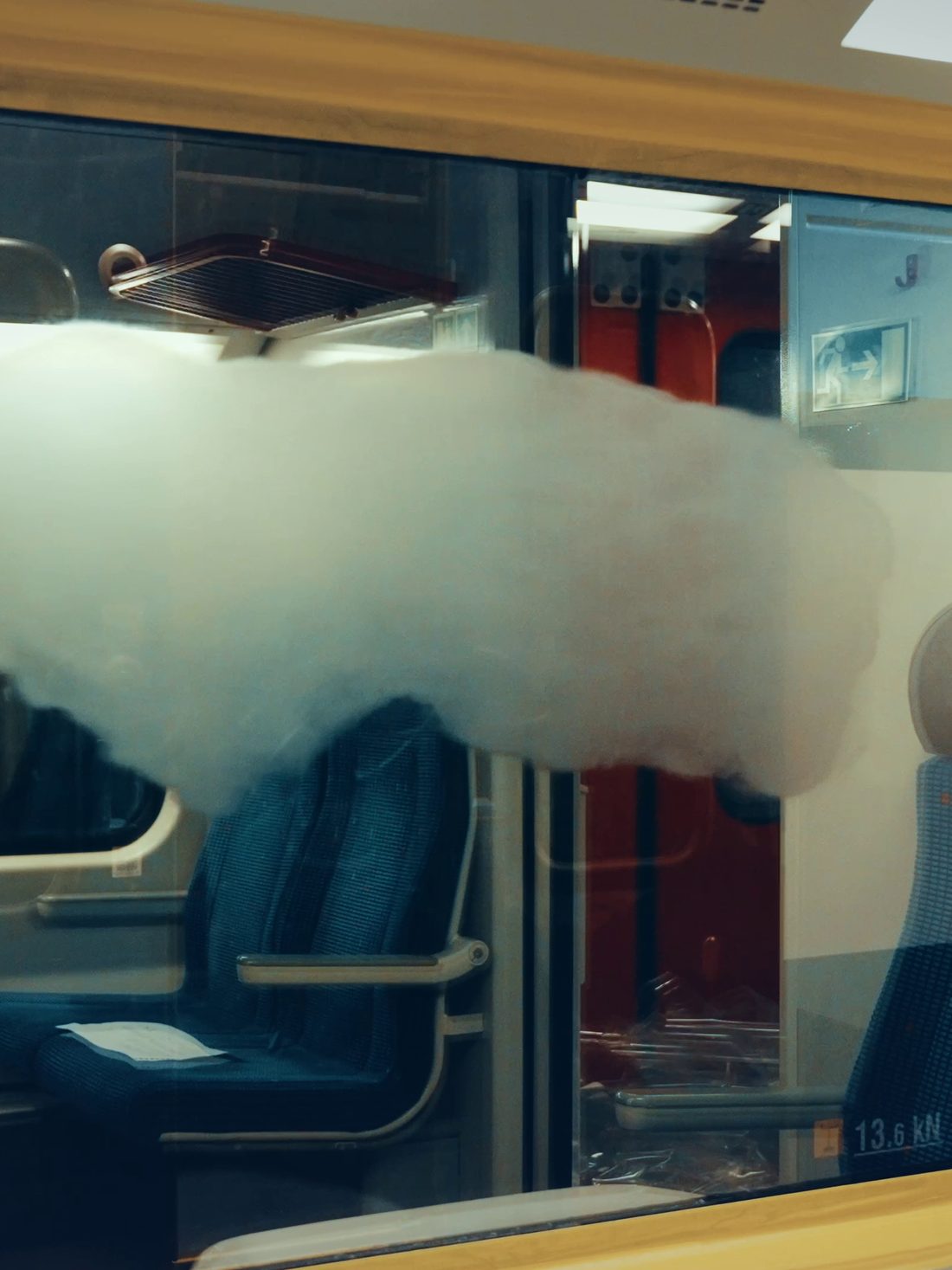
Custom colours and digital printing across the exterior and the interior — a new livery, a standardised fleet, or a straight refresh.
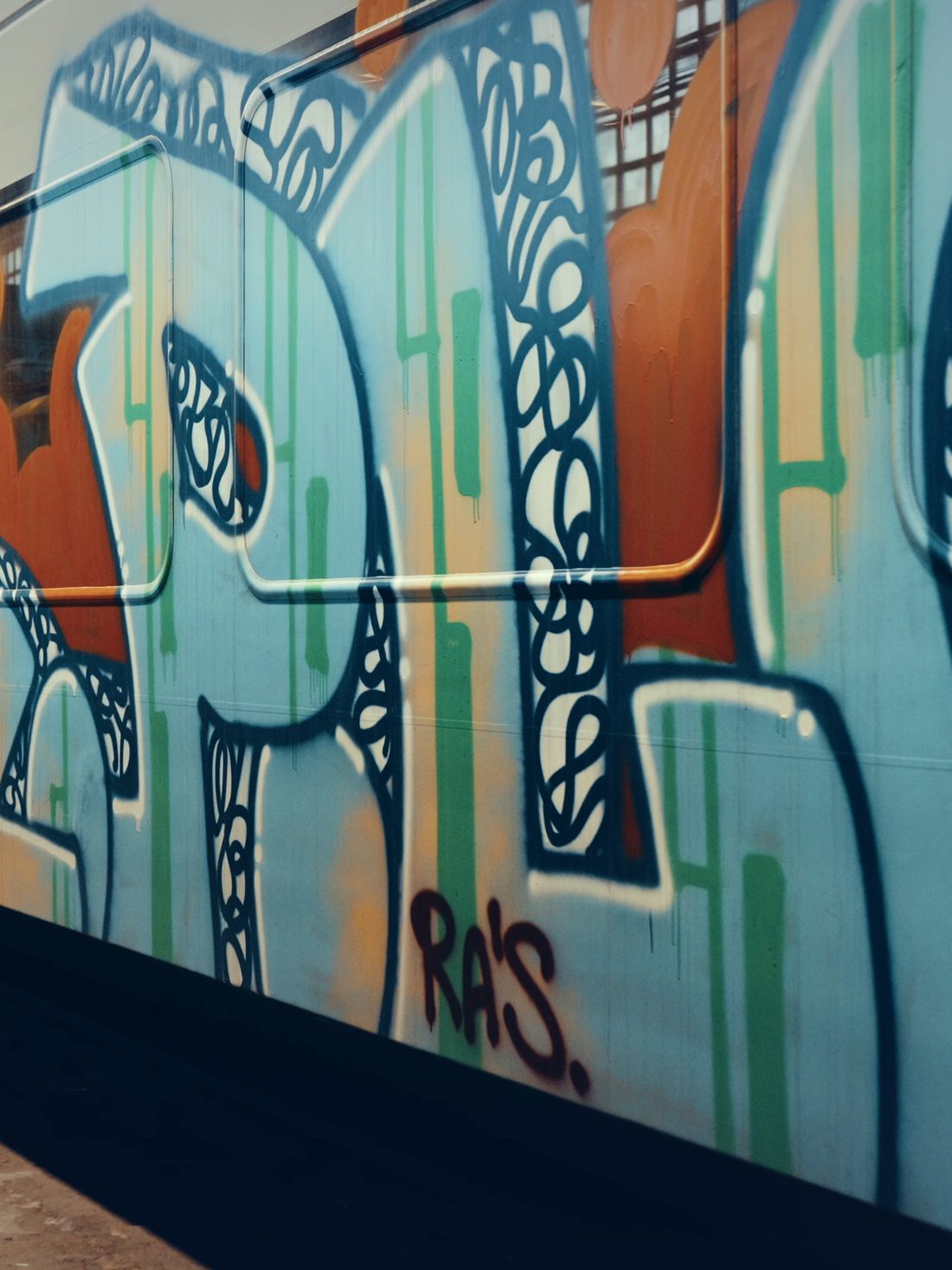
For the surfaces a wrap cannot cover. Suitable for effectively any substrate, and it takes the same cleaning regime as the film.
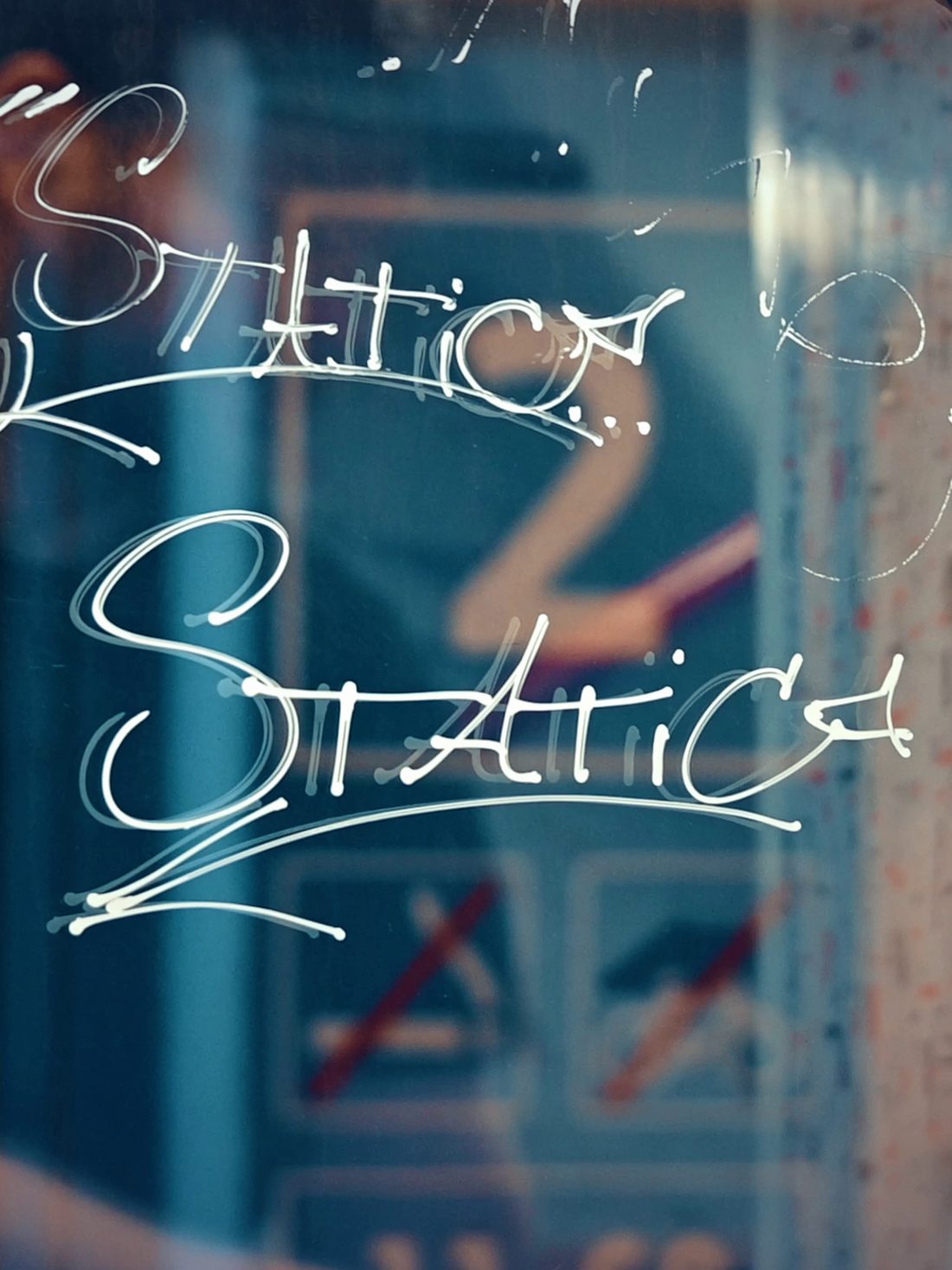
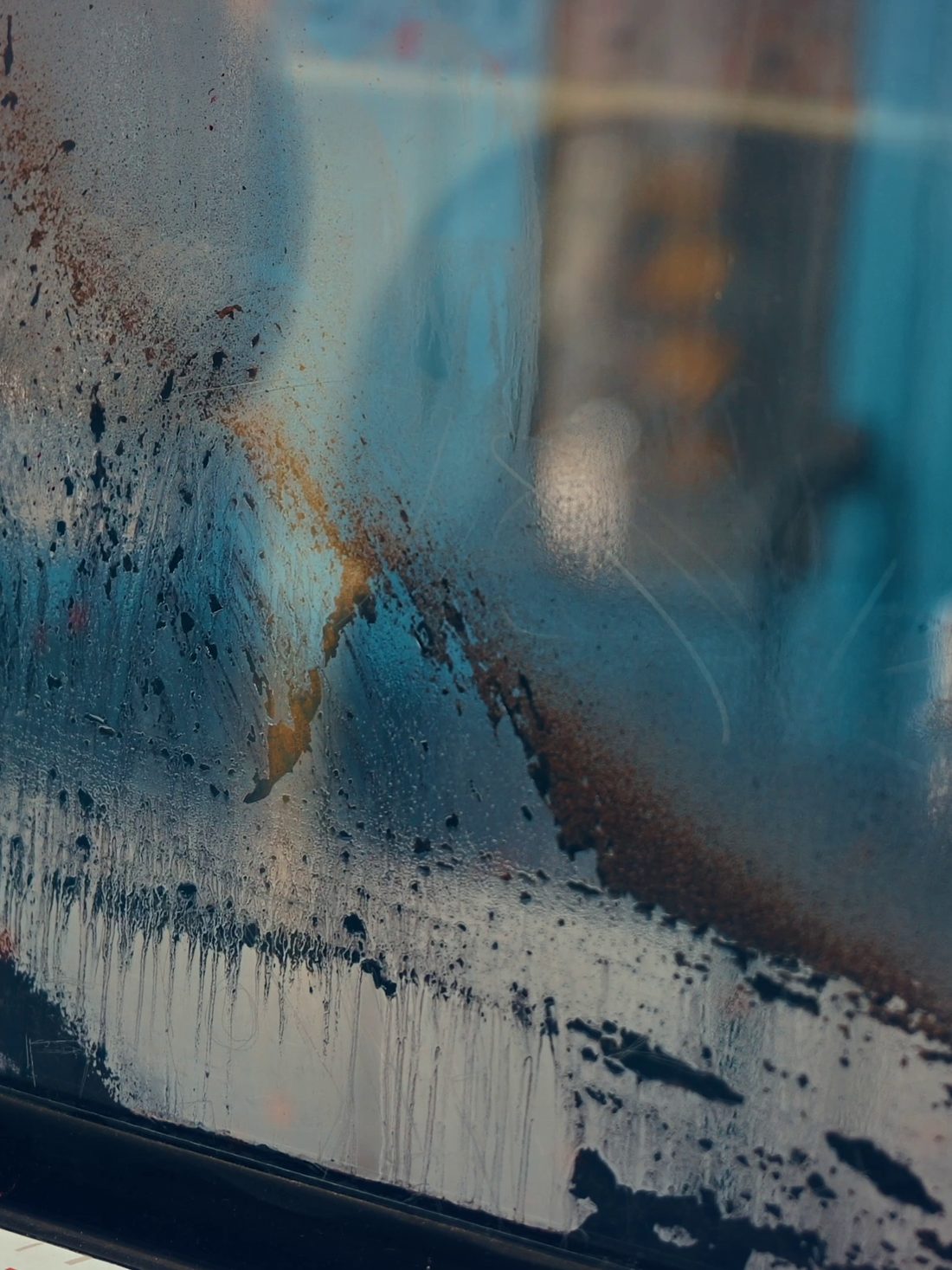
Scratched and etched windows are restored in place, so damaged glass does not have to be pulled out and replaced.
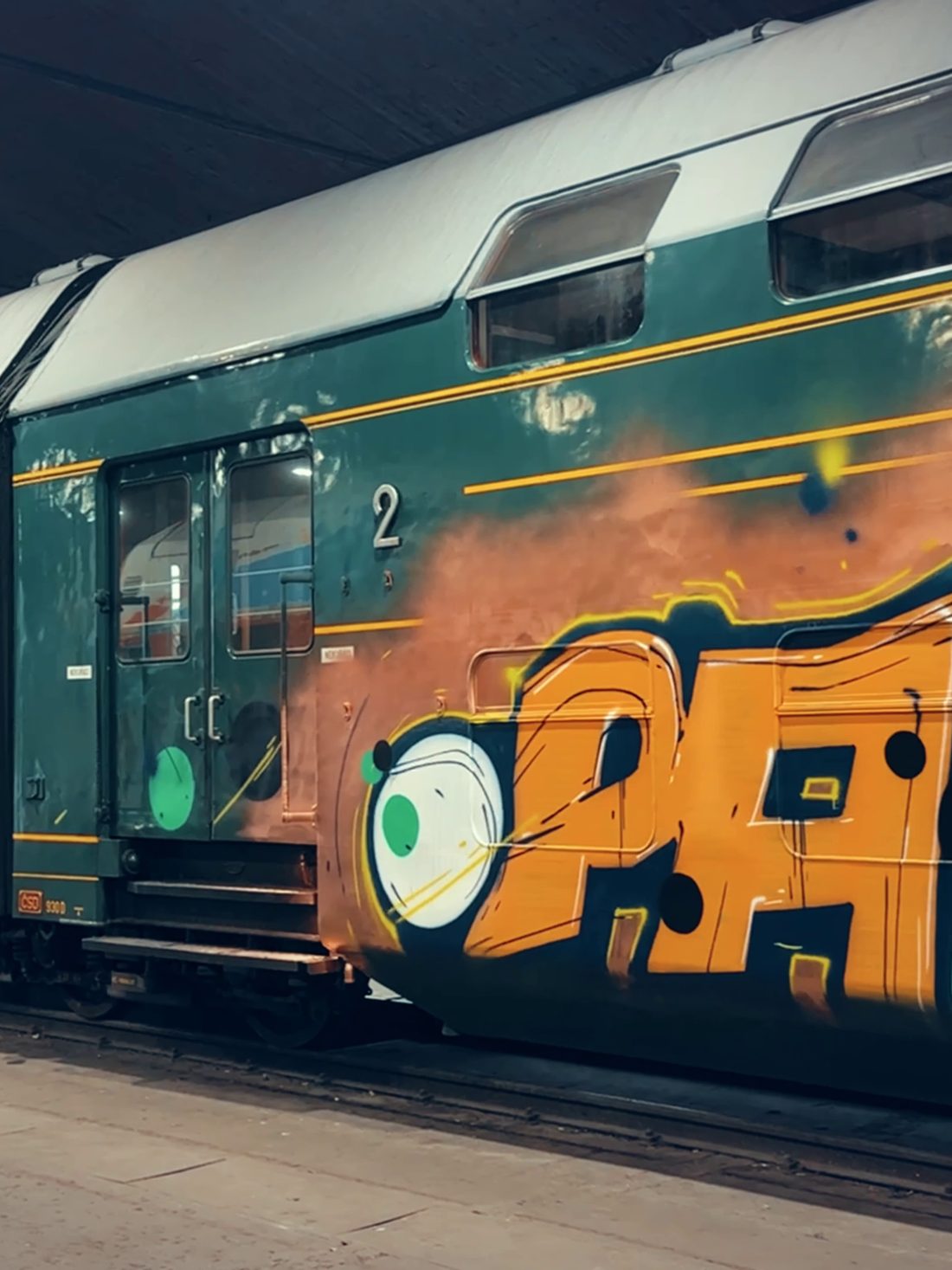
Scheduled cleaning, graffiti removal and technical markings kept current for the life of the wrap — at 20 m² an hour rather than four.
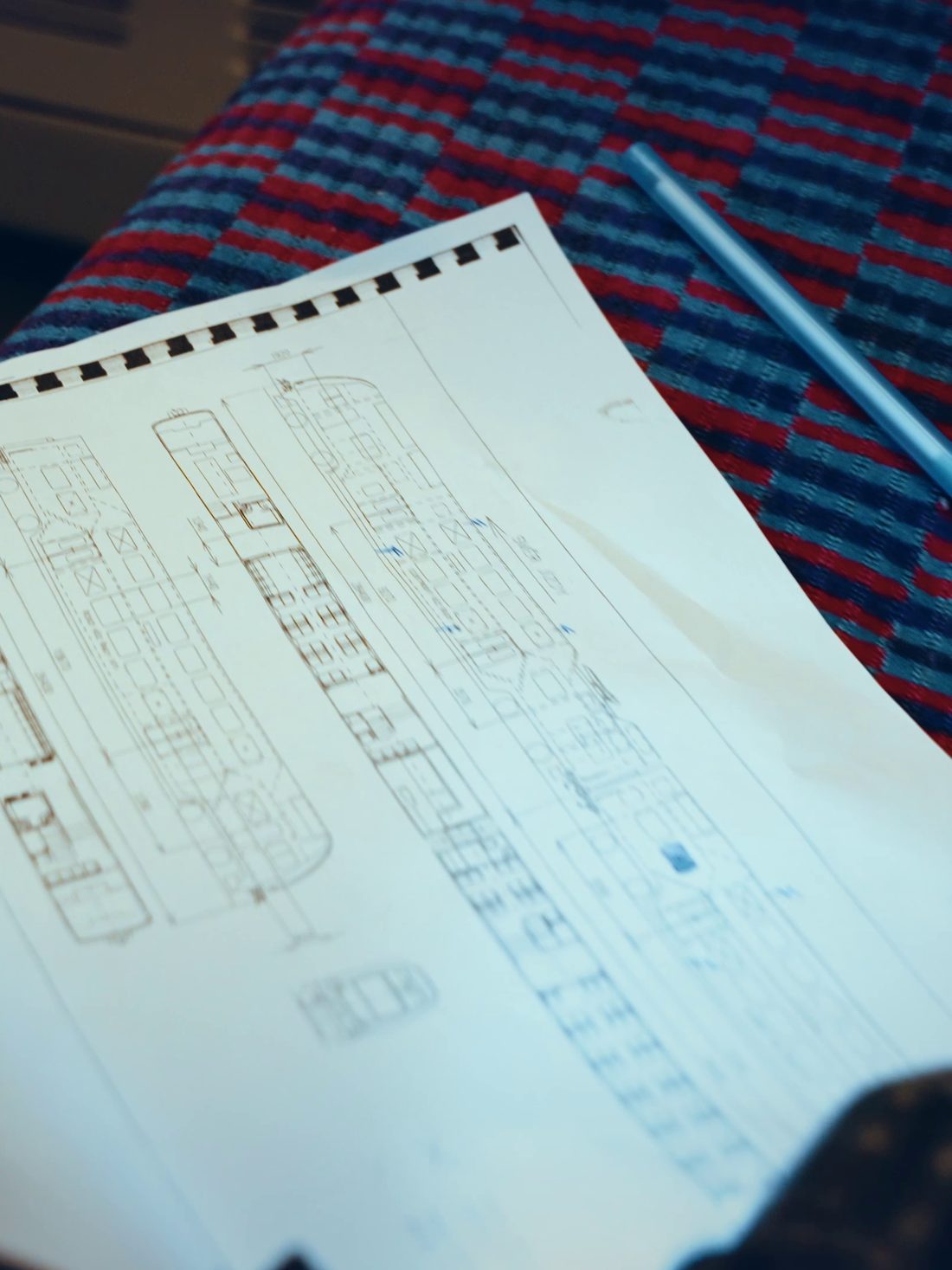
Concept and design, procurement, pre-production and the schedule itself. One point of contact from the first drawing to the last car back in service.
Short answers on film, depot work, and what happens after a tag.
Most railcars are prepped and wrapped in about two days in the depot — against roughly 300 hours for a full repaint.
Yes. We work in your facility, or the film can be specified on new builds straight from the factory.
Spray paint sits on the film, not in the paint. It lifts with standard cleaners — typically around 20 m² an hour.
Eight years on the film. Paint warranties are usually closer to three, and the wrap outlives that comfortably.
The wrap covers the body. Glass etching we restore in place; areas film cannot reach get an anti-graffiti coating.